LinkedIn Outreach in 2026: What Still Works (And What Gets You Banned)
LinkedIn has cracked down on automation. Here's how to use the platform effectively for sales without risking your account.
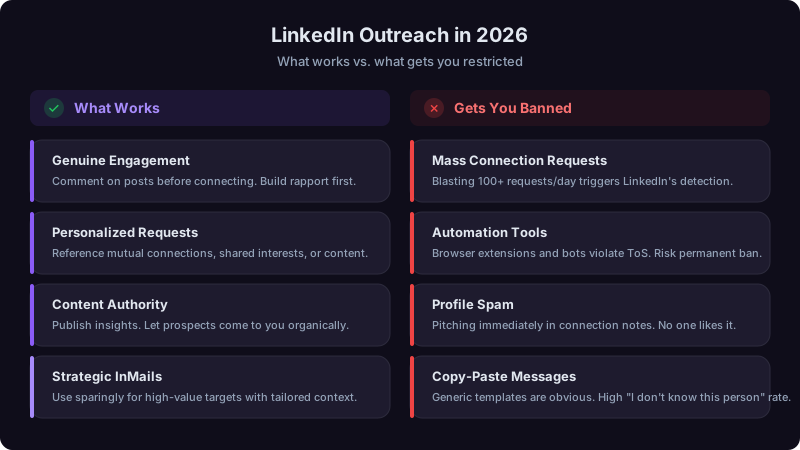
Two years ago, I got my LinkedIn account restricted for a week. I was running 80+ connection requests a day through an automation tool, blasting the same message to everyone. My SSI score tanked, my connection acceptance rate dropped to 8%, and I booked exactly zero meetings that month.
That restriction was the best thing that happened to my outreach practice. It forced me to start over from scratch, manual, intentional, slow. And my results tripled within 90 days.
I now run LinkedIn outreach programs for our entire sales team. What I've learned is that LinkedIn in 2026 rewards patience, specificity, and actual human behavior. The "spray and pray" era is dead. But if you're willing to put in the right kind of effort, LinkedIn is still the single best channel for B2B pipeline generation.
What Changed (And Why Your Old Playbook Is Dangerous)
LinkedIn's detection systems have gotten dramatically better since 2024. They're not just looking for automation tools anymore, they're analyzing behavioral patterns.
LinkedIn now monitors: connection request velocity (sudden spikes trigger reviews), message similarity scores (sending near-identical messages to multiple people), profile view patterns (viewing 200 profiles in an hour isn't human behavior), and IP/device patterns from automation tools. Even "undetectable" browser extensions leave fingerprints. If your account gets restricted twice, the third time is often a permanent ban, and you lose your entire network.
Here's what the enforcement looks like in practice:
The stakes are real. A banned account means losing years of network building, all your Sales Navigator saves, and your credibility with prospects who try to find you later.
Profile Optimization: Your Silent Sales Tool
Before you send a single connection request, your profile needs to do the selling for you. Every prospect you reach out to will check your profile within minutes. If it reads like a resume, they'll ignore you.
Bad: "Account Executive at Prospectory | Helping Companies Grow"
Better: "I help B2B sales teams book 3x more meetings from the same outreach volume"
Your headline should answer the question: "Why should I care about connecting with this person?" Lead with what you do for people like them, not your job title.
Structure it like this:
- First two lines (visible before "see more"): A specific, measurable claim or question that hooks your ICP
- Middle: 2-3 short paragraphs about the problems you solve, with real numbers
- End: A clear, low-pressure CTA ("If you're dealing with [problem], I'd welcome a conversation.")
Pin your three best-performing content pieces. Case studies, original posts that got strong engagement, or short videos explaining your POV. This section is prime real estate that most salespeople leave empty.
If a prospect scrolls your profile and sees you haven't posted in months, that's a signal. Your recent activity should show you're engaged in the conversations your ICP cares about.
The Engagement-First Outreach Method
This is the framework I teach every rep on our team. It takes more time per prospect than blast outreach, but the conversion rates aren't even close.
Phase 1: Warm Up (Days 1-5)
Before you ever send a connection request, make yourself visible:
- Comment on their posts: Not "Great post!" but an actual thought. Add a perspective, share a relevant experience, ask a follow-up question. Aim for 2-3 sentences minimum.
- Engage with their network: Comment on posts from people they interact with. LinkedIn's algorithm will start showing your name in their feed.
- React to their content: Likes and reactions put your face in their notification tab repeatedly.
The goal here is name recognition. When your connection request eventually arrives, they should think "oh, that person who left that interesting comment" instead of "who is this?"
Phase 2: Connect With Context (Day 5-7)
Now send the connection request. Always include a note (requests with notes get 2-3x higher acceptance rates in my experience). The note should:
- Reference something specific (a post they wrote, a comment you both engaged on, a mutual connection)
- NOT pitch anything
- Be genuinely brief, 2-3 sentences max
Template that works for me: "Hey [Name], I've been following your posts on [topic] and really liked your take on [specific point]. Would love to connect and keep the conversation going."
Template that gets ignored: "Hi [Name], I noticed you're [title] at [company]. We help companies like yours [vague value prop]. Would you be open to a quick chat?"
The difference? The first one is about them. The second one is about you.
Phase 3: Value Before the Ask (Days 7-14)
After they accept, do NOT immediately pitch. This is where 90% of salespeople blow it. Instead:
- Send a genuine thank-you message (one sentence, no links)
- Continue engaging with their content
- Wait 3-5 days, then share something genuinely useful, an article, a data point, an introduction, related to what they care about. No attachment to your product.
Phase 4: The Conversation Starter (Day 14+)
Only now do you move toward a business conversation. And even here, don't pitch. Ask a question:
"I've been thinking about something you mentioned in your post about [topic]. We're seeing something similar with [specific observation]. Curious, how are you approaching [specific challenge] right now?"
This opens a dialogue. From there, if there's a genuine fit, the meeting happens naturally. If there isn't, you've built a real connection who might refer you later.
Content Strategy: Inbound Connections at Scale
Outbound gets you meetings one at a time. Content gets prospects coming to you. I spend about 3 hours per week on LinkedIn content, and it consistently generates 5-10 inbound connection requests from ICP prospects per week.
What to post (and how often):
| Content Type | Frequency | Purpose |
|---|---|---|
| Personal POV on industry trends | 2x/week | Establish expertise |
| Tactical how-to (short, specific) | 1x/week | Provide immediate value |
| Customer win story (anonymized if needed) | 1-2x/month | Social proof |
| Contrarian take or hot take | 1-2x/month | Drive engagement and visibility |
| Comment on others' viral posts | Daily | Piggyback on existing audiences |
80% of your engagement will come from the first two lines of your post. Write those lines like email subject lines, specific, curiosity-driving, and relevant to your ICP's daily reality. "We booked 47 meetings last month from cold outreach. Here's the one change that made the difference." is better than "Thoughts on outbound prospecting in 2026."
What NOT to post:
- Company press releases disguised as personal posts
- Humble brags without actionable takeaways
- Anything that starts with "I'm thrilled to announce..."
- Long posts with no formatting (wall of text = scroll past)
What Gets You Banned (The Full List)
I want to be very explicit about this because I've seen reps lose accounts they spent years building.
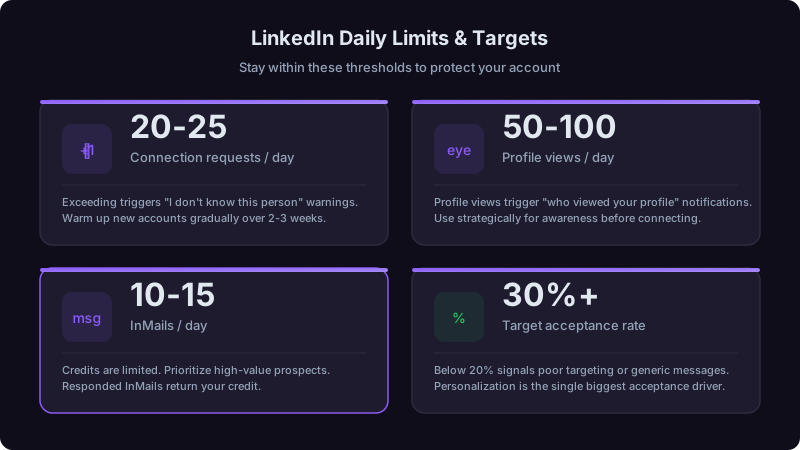
Definite ban risks:
- Any third-party automation tool that controls your LinkedIn actions (Dux-Soup, LinkedHelper, PhantomBuster for connection automation, etc.)
- Scraping profile data at scale
- Sending more than 100 connection requests per week consistently
- Using multiple LinkedIn accounts
High-risk behaviors:
- Sending connection requests to people with zero mutual connections or shared context (high "I don't know this person" report rate)
- Copy-pasting identical messages to more than 10 people
- Viewing 200+ profiles in a single day
- Withdrawing and resending connection requests to the same people
Safe daily activity limits (based on what I've seen work without triggering restrictions):
Using Sales Navigator Properly
Sales Navigator is worth the investment, but most reps use about 10% of its capabilities. Here's what actually moves the needle:
Lead and Account saves with alerts: Save your top 100 target accounts and key contacts. LinkedIn will notify you when they post, change jobs, or their company appears in the news. This is your trigger-based outreach fuel.
Boolean search for precision targeting: Don't just search by title and company size. Layer in: years in role (people in a new role for 3-6 months are 2x more likely to buy), posted on LinkedIn in the last 30 days (active users respond more), and mutual connections (warm paths beat cold ones every time).
TeamLink: If anyone at your company is connected to your prospect, you can see that path. Warm introductions have a 40%+ acceptance rate vs. 20-25% for cold requests. Use this before every cold outreach attempt.
Measuring What Matters
Track these metrics weekly. I keep a simple spreadsheet, nothing fancy required.
LinkedIn outreach is a compounding channel. Month 1 will feel slow. You're building visibility, warming up prospects, establishing your content presence. By month 3, you'll have a steady flow of inbound connections, warm conversations, and meetings. By month 6, prospects will be reaching out to you. The reps who quit after 30 days because "LinkedIn doesn't work" are the same reps who never gave the compound effect time to kick in.
My Weekly LinkedIn Routine
Here's exactly how I spend my LinkedIn time each week:
Monday (30 min): Review Sales Navigator alerts. Note any job changes, company news, or posts from saved leads. Queue up 5-10 engagement targets for the week.
Tuesday-Thursday (20 min/day): Comment on 5-8 posts from prospects and industry voices. Send 10-15 personalized connection requests. Respond to any inbound messages. Post original content (Tuesday and Thursday).
Friday (20 min): Follow up on open conversations. Share one piece of content. Review weekly metrics (acceptance rate, response rate, meetings booked). Adjust targeting for next week if needed.
Total time: about 2.5 hours per week. The reps on my team who follow this rhythm consistently book 8-12 meetings per month from LinkedIn alone. Not because they found a secret hack, but because they showed up consistently and treated prospects like people, not lead records.
The bottom line: LinkedIn outreach in 2026 is slower, more manual, and more personal than what most sales playbooks teach. That's actually good news, because most of your competitors won't put in the effort. The ones who do will own the channel.
Ready to transform your sales pipeline?
See how Prospectory's AI-powered platform can help your team research, reach, and relate to prospects at scale.
Related Articles
Reddit Prospecting for B2B: The 9:1 Rule That Builds Pipeline Without Bans
Reddit hosts raw buyer intent that outperforms third-party data, but sales tactics get you banned. Here's the 3-6 month credibility playbook and enrichment workflow that actually works.
LinkedIn Comments Are Worth 8x More Than Likes: A Social Selling Playbook
LinkedIn's algorithm now rewards comments over likes by 8x in reach. Here's how to engineer conversations that turn comment threads into qualified pipeline.
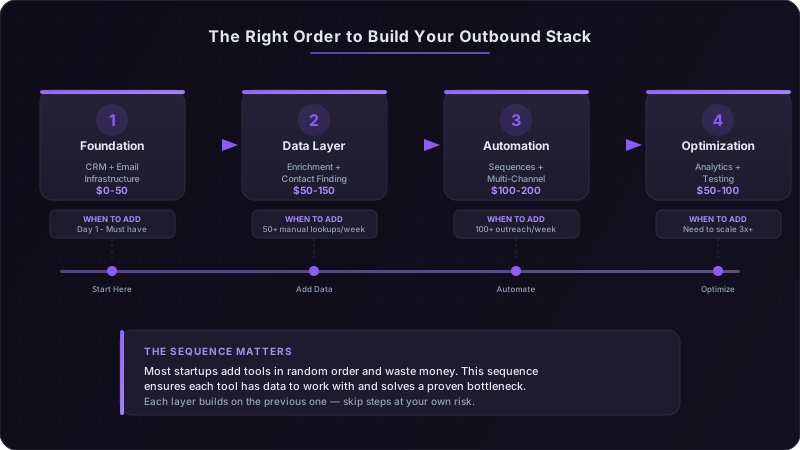
Building an Outbound Tech Stack for Under $500/Month
The complete guide to assembling a startup outbound sales stack that actually works-without burning cash on tools you'll never use.