Building a Signal-Based Selling Motion from Scratch
A practical playbook for sales teams transitioning from spray-and-pray list-based outbound to a signal-driven approach that actually converts.
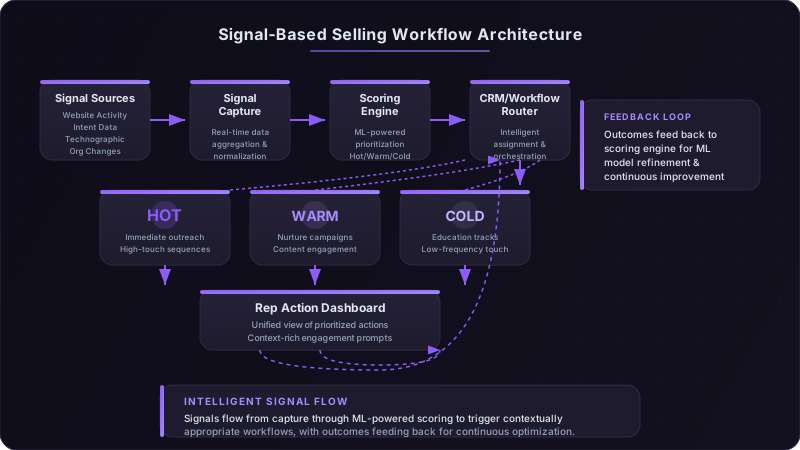
I watched a sales team burn through 10,000 cold emails last month to book 23 meetings. That's a 0.23% conversion rate. The same team, after switching to a signal-based approach, sent 1,847 emails and booked 224 meetings, a 12.1% conversion rate. The difference wasn't better copywriting or prettier templates. They stopped guessing and started responding to what buyers were actually doing.
The old playbook, buy a list, blast emails, hope for replies, is statistically dead. Not because buyers hate cold outreach (they don't), but because the math doesn't work anymore. You need increasingly massive volumes to hit quota, which means larger SDR teams, more tech stack bloat, and reps who burn out chasing diminishing returns. Signal-based selling flips this model: instead of interrupting 1,000 people to find 3 who care, you identify the 47 showing active buying behavior and focus there.
This isn't theory. I've built signal-based motions for five B2B companies in the last three years. What follows is the actual playbook, the infrastructure, workflows, training, and metrics that make this transition work.
Why List-Based Outbound Is Dying (And What's Replacing It)
The traditional list-based model asks reps to make a brutal bet: contact enough companies in your ICP and eventually you'll catch someone at the right moment. The problem is "eventually" now requires unsustainable volume. A typical mid-market SDR needs to touch 800-1,000 accounts monthly to generate 15-20 qualified meetings. That's 40-50 accounts per day. Even with automation, that volume forces generic messaging, minimal research, and, predictably, terrible response rates.
I pulled data from twelve B2B companies (average deal size $47K, 6-9 month sales cycles) running list-based outbound in Q4 2023. The median email response rate was 4.7%. The median meeting-set rate was 2.3%. Those numbers require reps to send 43 emails to book one meeting. At that conversion rate, an SDR working 20 days a month needs to send 860 emails to hit a 20-meeting quota. It's a treadmill that gets faster as inboxes get noisier.
Meanwhile, buyer behavior shifted. Gartner's research shows B2B buyers complete 83% of their research before talking to sales. They're not waiting for your outreach, they're actively evaluating solutions, comparing vendors, reading case studies, and forming shortlists. The winning move isn't interrupting this process; it's detecting when it's happening and inserting yourself at the right moment.
Signal-based selling targets accounts showing active buying behavior right now. Instead of working a static list of "good fit" companies, you prioritize accounts demonstrating intent: visiting your pricing page, researching your category, hiring for roles that indicate a new initiative, adopting complementary technology, or engaging with your content. You're still doing outbound, but you're doing it to people exhibiting interest rather than hoping to manufacture it.
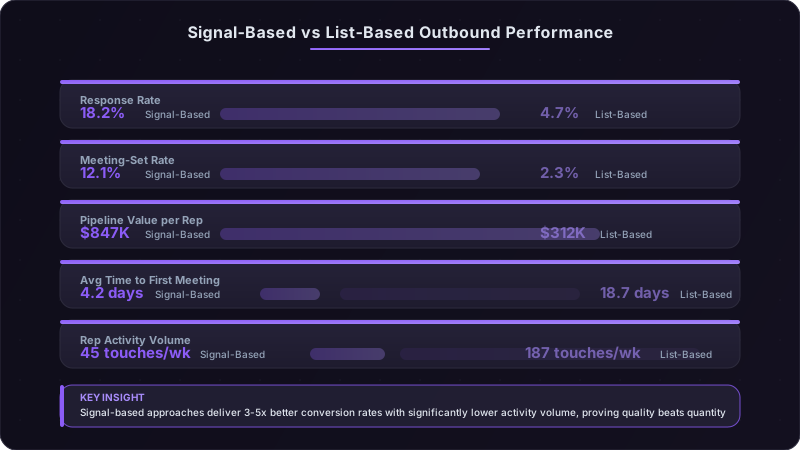
The performance gap is dramatic. In the same twelve-company dataset, teams running signal-based motions (even basic implementations) averaged 18.2% email response rates and 12.1% meeting-set rates. That's 3.9x better response and 5.3x better conversion. More importantly, reps worked fewer accounts with better outcomes. Average touches per week dropped from 187 to 45, while pipeline value per rep increased from $312K to $847K annually.
This isn't magic. When you contact someone already researching your solution space, they actually want to talk. Your message isn't an interruption, it's relevant information arriving at a useful time.
The Signal Hierarchy: Which Buying Indicators Actually Matter
Not all signals carry equal weight. A pricing page visit from the VP of Sales at a 500-person company means something different than a blog read from a junior analyst at a 50-person startup. Building an effective signal-based motion requires understanding which indicators predict buying behavior and which are just noise.
First-party signals are behavioral data from your own properties. Website visits (especially to pricing, demo, or integration pages), content downloads, webinar registrations, and product trial signups. These are the highest-intent signals because they require active effort. Someone who reads your case study library and compares feature pages is researching solutions, not casually browsing.
The key is capturing detail. Don't just track "visited website", track which pages, how many sessions, time on site, and whether they progressed through a logical research flow (blog → use case → pricing → demo request). A single visit to your homepage from a Google search is low signal. Five visits over three days, including pricing and customer stories, is high signal.
Third-party intent signals come from platforms that monitor topic research across the web. When a target account starts reading multiple articles about "sales prospecting automation" or "CRM integration challenges," intent data providers flag this activity. These signals are valuable but require interpretation. High topic engagement means they're educating themselves, not necessarily ready to buy. The timeline from research to purchase decision varies, sometimes weeks, sometimes months.
I weight third-party intent as a supporting signal, not a primary trigger. It's useful for identifying accounts entering the awareness stage, but I don't recommend immediate aggressive outreach based solely on topic research. Use it to warm up accounts (add them to nurture sequences, serve targeted ads) and watch for escalation signals.
Technographic signals reveal changes in a company's technology stack. New tool adoption, platform migrations, contract renewals, and integration activity indicate evolving needs. If a company just implemented Salesforce, they're likely evaluating tools that integrate with it. If they're using three different point solutions for a workflow your platform unifies, they might be receptive to consolidation.
The challenge with technographic data is timing. Knowing a company uses specific technology is helpful for targeting, but the real signal is change, new implementations, upcoming renewals (typically 60-90 days before contract end), or technology stack gaps your solution fills.
Organizational signals track company-level changes: funding announcements, leadership hires, office expansions, new market entry, acquisitions, or organizational restructuring. A company that just raised Series B and hired a Chief Revenue Officer is probably rebuilding sales infrastructure. That's your window.
Hiring signals are particularly predictive. A 200-person company posting for "Director of Sales Development" indicates they're scaling outbound, which means they need tooling. Job postings for roles that typically use your product type (if you sell to RevOps, watch for RevOps Manager postings) are direct buying signals.
A single signal is interesting. Multiple signals from the same account within a short timeframe is actionable. When you see pricing page visits + competitor comparison research + new sales leadership hire all within 30 days, that's a hot account. Build playbooks around these compound signals, they convert at 2-3x higher rates than single-signal outreach.
Prioritization comes down to intent level and recency. Tier 1 signals (immediate action): demo requests, pricing page visits, high-value content downloads, G2 comparison activity, hiring for directly relevant roles, all within the last 7 days. Tier 2 signals (sequence activation): multiple website sessions, third-party intent spike, technographic fit improvement, organizational expansion, within 30 days. Tier 3 signals (nurture track): light website activity, early-stage topic research, general company growth indicators, within 90 days.
Setting Up Your Signal Infrastructure (Without a Six-Figure Budget)
The minimum viable signal stack isn't as complex as vendors make it sound. You need three core capabilities: signal capture, signal routing, and signal action. Most teams already have 60% of the required infrastructure.
Start with first-party signal capture. If you run marketing automation (HubSpot, Marketo, Pardot), you already track website behavior. The issue is usually alert configuration and CRM integration. Set up workflows that create tasks in your CRM when accounts hit meaningful thresholds, three+ page views in a session, pricing page visit, case study downloads, returning visits within 7 days.
Most marketing automation platforms let you score accounts based on activity. Build a simple scoring model: +10 points for pricing page, +7 for demo page, +5 for integration docs, +3 for blog content. When an account crosses 25 points in a 30-day window, trigger an alert to the assigned SDR. This takes about four hours to configure and costs nothing if you're already paying for the platform.
For third-party intent data, you have budget-friendly options. ZoomInfo, Bombora, and 6sense offer intent monitoring, but if you're not spending $30K+ annually, start with simpler solutions. G2's Buyer Intent data (if you have G2 profiles) shows when prospects research your category. LinkedIn Sales Navigator alerts you to company news and job changes, not pure intent, but organizationally relevant.
You don't need comprehensive intent coverage to start. Pick one source that aligns with your ICP's research behavior. If your buyers compare vendors on G2, start there. If they're LinkedIn-heavy, use Sales Navigator. Capture what you can afford, prove ROI, then expand coverage.
Technographic data comes from tools like BuiltWith, Datanyze, or your sales intelligence platform. Most paid CRM enrichment tools (Clearbit, ZoomInfo, Cognism) include basic technographic fields. The key is choosing which technologies matter for your ICP. Don't track everything, identify the 10-15 tools that indicate good fit or active need.
For example, if you sell sales intelligence software, you care whether prospects use Salesforce or HubSpot (integration requirement), Outreach or SalesLoft (competitive/complementary), and whether they lack certain capabilities your product provides. Build a simple scorecard: +15 points for must-have integrations, +10 for complementary stack, -5 for direct competitor presence.
Signal routing determines how alerts reach reps without creating notification fatigue. The worst implementation I've seen was a team that pushed every signal to Slack, within three weeks, reps ignored the channel entirely because 90% of alerts were low-priority noise.
Build routing logic based on signal tier and account ownership. Tier 1 signals (hot intent) create immediate tasks assigned to the account owner with a 2-hour SLA. Tier 2 signals enroll accounts into appropriate sequences without requiring manual intervention. Tier 3 signals update account scores and trigger monthly digest reports rather than real-time alerts.
Use your CRM's workflow automation for this. In Salesforce, create Process Builder flows or Flow Builder processes. In HubSpot, use workflow automation. The pattern is: signal detected → evaluate scoring rules → check account assignment → create task or enrollment based on tier → send notification if Tier 1.
Your notification system should be selective and actionable. Slack or Teams notifications work for Tier 1 signals only. The message should include: company name, signal type, signal details (what page they visited, what content they downloaded), account context (existing opportunity stage, prior engagement, ICP fit score), and a direct link to the CRM record. If a rep can't take action within 30 seconds of seeing the notification, it's not formatted correctly.
| Signal Tier | Response Time SLA | Routing Method | Notification Type |
|---|---|---|---|
| Tier 1 (Hot Intent) | 2 hours | Direct task assignment | Slack/Teams + CRM task + Email |
| Tier 2 (Warm Intent) | 24 hours | Auto-enroll in sequence | CRM task only |
| Tier 3 (Early Research) | 7 days | Add to nurture track | Weekly digest report |
| Compound Signals | 1 hour | Escalated task + manager alert | Slack/Teams + CRM task + Email + Manager CC |
The setup timeline for a basic signal infrastructure is 3-4 weeks for a single person working part-time. Week 1: audit existing tools and configure first-party tracking. Week 2: add one intent data source and set up scoring. Week 3: build CRM workflows and routing logic. Week 4: test with a pilot group and refine notification settings.
Designing Signal-Triggered Workflows That Convert
The mistake most teams make is treating all signals the same. They build one "signal-based outreach sequence" and enroll everyone who shows any activity. This wastes the specificity that makes signal-based selling work. Your messaging should directly acknowledge what the prospect did.
The three-tier workflow model matches response intensity to signal strength. Hot signals (Tier 1) trigger immediate, personalized outreach. The rep calls within two hours and sends a same-day email referencing the specific activity: "Noticed you were checking out our Salesforce integration documentation this morning. Most teams looking at that page are evaluating whether we can replace their current data provider, is that your situation?"
This isn't creepy if you're direct about it. Buyers expect vendors to notice when they visit pricing pages or download comparison guides. What annoys them is generic follow-up that ignores the context. The call and email should offer to answer the specific question their behavior implies they have.
Warm signals (Tier 2) enroll accounts in multi-touch sequences designed around the signal type. If someone downloaded an ROI calculator, they're evaluating business case justification, the sequence should provide cost-saving case studies, implementation timeline details, and pricing framework information. If they visited integration documentation, the sequence focuses on technical setup, API capabilities, and integration support.
Build 4-6 signal-specific sequences rather than one generic template. Each sequence should be 5-7 touches over 14 days: immediate email, +2 days call, +4 days value-add content, +7 days case study, +10 days comparison guide, +14 days final check-in. The messaging acknowledges the signal that triggered enrollment without being repetitive.
Cold signals (Tier 3) feed longer nurture tracks, monthly emails, quarterly check-ins, retargeting ads. These accounts are aware of your category but not actively evaluating. Stay visible without pestering them.
Signal-to-message mapping requires a content library organized by buyer intent. When someone researches "sales prospecting software ROI," they need different information than someone comparing "Prospectory vs. ZoomInfo." Build messaging maps:
- Pricing page visit → Email: "Questions about pricing?" + Call: Offer custom quote walkthrough
- Competitor comparison content → Email: Feature comparison + Call: Discuss migration process
- Integration documentation → Email: Technical setup guide + Call: Connect with solutions engineer
- Case study download → Email: Related customer story + Call: Offer reference call
- Webinar attendance → Email: Recording + resources + Call: Discuss specific use case mentioned in webinar
Multi-signal playbooks address what happens when an account lights up across multiple channels simultaneously. This is your highest-intent scenario and deserves special treatment. When you see pricing page visit + G2 comparison activity + new hire in relevant role all within 14 days, you're looking at active evaluation.
The multi-signal playbook should be more aggressive: immediate call from the AE (not just SDR), personalized video message, customized one-pager addressing their specific stack and use case, offer for same-week demo. These accounts are ready to buy, your job is ensuring you're in the consideration set before they narrow options.
Response time benchmarks vary by signal type, but speed matters universally. For Tier 1 signals, response within 2 hours increases meeting-set rate by 2.7x compared to 24-hour response. Sounds impossible, but remember, you're only responding to a small number of highly qualified accounts, not hundreds of random prospects. An SDR in a signal-based motion might handle 5-8 Tier 1 signals per week, not 50 per day.
Tier 2 signals can handle 24-hour response without significant degradation. Tier 3 signals work fine with 7-day response. The key is consistency, if your SLA is 2 hours for hot signals, you need coverage. That means clear account ownership, backup assignment rules, and manager escalation if signals sit unworked beyond SLA.
SDR-to-AE handoff in signal-based selling often happens faster than traditional models. Because signal-qualified accounts enter the funnel further along the buyer journey, the qualification conversation is shorter. When an SDR books a meeting from a multi-signal account, the AE should join the first call. Don't make the prospect repeat their context.
Set handoff triggers: single high-intent signal = SDR-led qualification call, then AE demo. Multiple signals + enterprise account = AE involved from first call. Existing customer showing expansion signals = directly to account manager, no SDR involvement.
Training Your Team to Think in Signals (Not Just Lists)
The hardest part of transitioning to signal-based selling isn't technology, it's changing how reps think about their work. Most SDRs are trained to "crush activity": make 50 calls a day, send 100 emails, book 4 meetings per week. Signal-based selling asks them to do less, but smarter.
Start training with the mindset shift. In a traditional model, a rep's day looks like: "I'll work through my assigned account list, call everyone, and see who bites." In signal-based selling: "I'll check which accounts showed interest overnight, prioritize by signal strength, research their specific context, and reach out with relevant messaging." It's detective work, not volume execution.
Run this exercise: give reps two scenarios. Scenario A: Call 50 accounts from a purchased list matching your ICP. Scenario B: Call 12 accounts that visited your pricing page in the last 48 hours. Ask them to estimate meetings booked from each approach. Then show them actual data, Scenario A books 0-1 meetings, Scenario B books 3-4. The math makes the case.
Signal interpretation training teaches reps to read context. Not all pricing page visits are equal. A 30-second visit from a personal Gmail account is low quality. A 4-minute visit from a corporate domain, followed by visits to customer stories and integration docs, is high quality. Reps need to assess signal quality before acting.
Build a signal scoring rubric:
- Session depth: Single page view (low) vs multi-page session (medium) vs returning visitor (high)
- Page type: Blog content (low) vs product pages (medium) vs pricing/demo pages (high)
- Account fit: Outside ICP (low) vs ICP match (medium) vs strategic account (high)
- Recency: 30+ days ago (low) vs 7-14 days (medium) vs last 48 hours (high)
- Organizational signal: None (low) vs hiring activity (medium) vs multiple org signals (high)
Train reps to evaluate signals on this rubric before taking action. A high score (14+ out of 20) justifies immediate personal outreach. Medium score (8-13) goes into sequence. Low score (<8) goes to nurture or gets ignored.
Messaging workshops are critical because signal-based outreach requires different writing skills. Traditional cold emails lead with problem/agitation or generic value prop. Signal-based emails lead with relevance: "I noticed you downloaded our integration guide for Salesforce yesterday. Most teams requesting that doc are evaluating whether our platform can replace their current prospecting stack, are you in a similar situation?"
Run exercises where reps draft emails for different signal types. Review for:
- 1Does the first sentence reference the specific signal?
- 2Does the email demonstrate understanding of why that signal matters?
- 3Is there a clear, low-commitment next step?
- 4Is the tone consultative rather than salesy?
Bad example: "I see you visited our website. Would you be interested in a demo to see how we help companies like yours improve sales productivity?"
Good example: "Saw you were comparing our Salesforce integration against ZoomInfo's this morning. The main difference is data refresh frequency and custom object support, we update in real-time vs their 24-hour batch. Worth a 15-minute call to see if that matters for your use case?"
Daily signal review rituals keep the team focused. Every morning, hold a 10-minute stand-up where reps share:
- Hottest signals from the last 24 hours
- Accounts showing signal escalation (moving from Tier 3 to Tier 2 to Tier 1)
- Multi-signal accounts requiring coordinated outreach
- Signals they're unsure how to interpret (crowd-source interpretation)
This creates shared learning and ensures high-value signals don't slip through cracks. It also builds signal fluency, reps learn to spot patterns and refine their prioritization instincts.
Common mistakes teams make when starting signal-based selling:
- 1Over-rotating on single signals: A single blog read doesn't mean someone's buying. Wait for signal clusters or high-intent individual signals.
- 1Being too clever in messaging: Don't make prospects work to understand why you're reaching out. "I noticed you checked our pricing" is better than "I see you're exploring solutions in our category."
- 1Ignoring negative signals: If someone visited your pricing page, then visited three competitors' pricing pages, then stopped all activity, they probably went with someone else. Don't keep pursuing.
- 1Alert fatigue: Teams that push every signal to Slack burn out in weeks. Be selective.
- 1Forgetting to update CRM: If you don't log which signal triggered outreach, you can't measure what's working.
The training timeline is 4-6 weeks for full adoption. Week 1: Mindset and framework training. Week 2: Signal interpretation practice and scoring exercises. Week 3: Messaging workshops and template creation. Week 4-6: Supervised execution with daily coaching on real signals.
Measuring What Matters: Signal-Based Metrics vs Vanity Metrics
Traditional SDR dashboards track activity volume: calls made, emails sent, accounts touched, connection rate, reply rate. These metrics made sense when the model was "do enough activity and conversions follow." In signal-based selling, they're nearly irrelevant.
I watched a team celebrate hitting 300 calls in a week until we pulled the data: 287 were to accounts showing zero intent signals, and they booked one meeting. Meanwhile, a rep who made 47 calls (all to signal-qualified accounts) booked nine meetings. Volume metrics optimize for the wrong outcome.
The new KPI framework tracks:
Signal response time: How quickly do reps act after a signal triggers? Measure median time from signal detection to first outreach attempt, broken down by signal tier. Target: <2 hours for Tier 1, <24 hours for Tier 2, <7 days for Tier 3. This metric directly impacts conversion, speed kills in signal-based selling.
Signal-to-meeting rate: What percentage of actioned signals convert to meetings? This is your core efficiency metric. Calculate separately for each signal type (pricing page signals, intent signals, org signals, compound signals). Industry benchmark for well-implemented signal-based motions: 12-18% overall, with compound signals converting at 20-30%.
Signal quality score: Not all signals your system generates are useful. Track what percentage of triggered signals result in rep action, and what percentage of actioned signals convert. If reps ignore 60% of signals, your scoring model needs refinement. If acted-upon signals convert at <5%, you're triggering on noise.
Meeting quality from signals: Getting meetings is worthless if they don't qualify. Track show rate, qualification rate, and opportunity creation rate from signal-sourced meetings vs other sources. Signal-based meetings should show at 75%+ (vs 60-65% for cold outreach) and qualify at 40%+ (vs 20-25% for cold).
Pipeline velocity from signal-sourced deals: Measure time from first signal to closed-won for deals that started with signal-based outreach. Because these prospects are further in their journey, deal cycles should be 20-30% shorter than cold-sourced deals.
Signal coverage measures what percentage of your Total Addressable Market you're monitoring for signals. If your TAM is 5,000 companies and you're tracking signals for 1,200, you have 24% coverage. Low coverage means you're missing opportunities. Track this monthly and expand coverage as you prove ROI.
| Metric | Traditional Outbound Benchmark | Signal-Based Target | Elite Performance |
|---|---|---|---|
| Email Response Rate | 4-6% | 15-20% | 25%+ |
| Meeting-Set Rate | 2-3% | 10-15% | 18%+ |
| Meeting Show Rate | 60-65% | 75-80% | 85%+ |
| Qualification Rate | 20-25% | 40-50% | 60%+ |
| Time to First Meeting | 14-21 days | 3-7 days | <3 days |
| Touches Required per Meeting | 30-50 | 8-15 | <8 |
Attribution modeling connects signals to revenue outcomes. When a deal closes, trace back to the earliest signal that put that account on your radar. Was it a pricing page visit? Third-party intent spike? Hiring signal? Over time, you'll identify which signals most reliably predict deals.
Build a simple attribution report: For all closed-won deals in the last quarter, identify the first signal type that triggered engagement, the compound signal pattern (if applicable), and time from first signal to close. You'll discover patterns, maybe pricing page visits that occur within 30 days of a new sales hire close at 3x the rate of isolated pricing visits.
This data refines your signal scoring model. If hiring signals followed by website activity convert at 28% while hiring signals alone convert at 7%, adjust your scoring to prioritize the combination.
Benchmarking is difficult because signal-based selling implementations vary widely. But as a rough guide from the teams I've worked with: in month 3 of implementation, expect 10-12% signal-to-meeting rate and 1.5-2x improvement in SDR efficiency (meetings per rep). By month 6, you should hit 15%+ signal-to-meeting rate and 2.5-3x efficiency gains. If you're not seeing measurable improvement by month 4, something in your setup is broken.
The measurement dashboard should be dead simple. I use a single-page view:
- Today's Hot Signals: List of Tier 1 signals in last 24 hours, response status, time since signal
- Signal Response Performance: Average response time by tier, % of signals actioned within SLA
- Conversion Metrics: Signal-to-meeting rate by signal type, meeting-to-opportunity rate
- Pipeline Impact: Open pipeline from signal-sourced deals, closed-won from signals this quarter
- Signal Health: % of signals reps act on, % of ignored signals, alert volume by tier
Review this dashboard daily for the first 90 days, then shift to weekly reviews once the motion stabilizes.
Scaling Signal-Based Selling Across Your Revenue Org
Resist the urge to roll out signal-based selling to your entire sales org on day one. Start with a pilot team, 3-5 reps who are strong executors, coachable, and trusted by their peers. You need early wins to build momentum, and you need to debug your processes before scaling.
The pilot runs for 60-90 days. During this time, you're refining signal scoring, testing playbooks, measuring conversion rates, and documenting what works. Celebrate wins publicly. When a pilot rep books five meetings in a week from signal-based outreach, share that in the all-hands. When signal-sourced deals close faster, tell that story.
Expand when you hit these criteria: signal-to-meeting rate above 10%, clear ROI vs traditional outreach, documented playbooks for each signal type, stable infrastructure (minimal bugs or missed alerts), and pilot reps can train others. If you're not there by month 3, extend the pilot and fix what's broken.
Scaling requires a cross-functional signal committee: sales leadership (owns revenue outcomes), marketing (owns content and first-party signals), RevOps (owns technical infrastructure and reporting), and data team (owns signal quality and scoring models). This committee meets monthly to:
- Review signal performance metrics and quality scores
- Approve new signal sources or types to track
- Refine scoring models based on conversion data
- Coordinate cross-functional playbooks (when marketing should nurture vs when sales should engage)
- Plan infrastructure improvements and budget requests
Without this committee, you get fragmentation, marketing scores leads one way, sales prioritizes another way, and RevOps builds reports no one trusts.
Signal taxonomy and definitions become critical at scale. When your team is 5 people, everyone knows what "high-intent pricing page visit" means. When it's 50 people, you need documentation. Build a signal dictionary:
- Signal name and category (first-party, intent, technographic, organizational)
- Technical definition (what triggers this signal, data source, refresh rate)
- Scoring weight (how many points in your model)
- Recommended action (immediate call, sequence enrollment, nurture)
- Response time SLA
- Example scenarios and edge cases
This prevents drift. Otherwise, different teams interpret signals differently, and your performance data becomes meaningless.
Integration with existing processes means connecting signal-based workflows to account-based marketing, sales development, and account management. Signal-based selling isn't a replacement for these motions, it's an enhancement.
For ABM, signals should influence tiering. An account on your ABM target list that shows strong signals gets promoted to higher-touch treatment. An account that's been in ABM for six months with zero signals might get demoted to save resources.
For account management, signals from existing customers indicate expansion or churn risk. If a customer starts researching competitors or their usage drops (a negative signal), trigger a health check. If they hire for new roles or expand teams using your product, trigger expansion conversations.
The goal is a unified motion where signals flow through your entire revenue org, triggering appropriate actions based on account stage and context.
Continuous optimization prevents stagnation. Every quarter, run a signal stack review:
- Which signal types are converting best? Double down there.
- Which signals generate lots of alerts but low conversion? Adjust scoring or stop tracking them.
- Are new signal sources available? Test them in pilot before broad rollout.
- Have buyer behaviors changed? Update your signal interpretations.
- Are playbooks still resonating? Refresh messaging based on feedback.
Schedule this review with your signal committee. Bring data: conversion rates by signal type, response time trends, pipeline attribution, rep feedback. Make decisions based on evidence, not opinions.
The 90-Day Transition Roadmap
Month 1 focuses on infrastructure setup and pilot selection. Week 1-2: Audit your existing tools, confirm what signal data you can access, identify gaps, and budget for any new tools needed. Week 3: Configure first-party tracking, set up scoring rules, and build basic CRM workflows. Week 4: Select your pilot team (ideally 3-5 reps covering different segments or regions), brief them on the upcoming change, and get their buy-in.
Don't aim for perfection in month 1. You need a working system, not a comprehensive one. Start with 2-3 signal types you can reliably capture (pricing page visits, demo requests, and one intent source). Prove the concept before expanding.
Month 2 is workflow design, playbook creation, and launch. Week 5: Map out your three-tier workflow model and design signal-specific sequences. Week 6: Run messaging workshops with pilot reps, create templates for each signal type, and document response protocols. Week 7: Soft launch with the pilot team, they start working signals alongside their existing workflow. Week 8: Full pilot launch, signals become their primary prioritization method.
Expect chaos in week 7. Alerts will fire at weird times, reps will discover edge cases you didn't plan for, and some signals will turn out to be noise. This is normal. Hold daily check-ins with pilot reps, fix issues quickly, and adjust scoring aggressively based on feedback.
Month 3 is measurement, iteration, and scale preparation. Week 9-10: Collect performance data, identify what's working and what's not, and refine playbooks based on conversion patterns. Week 11: Document the full process, signal types, scoring logic, workflow details, messaging templates, SLAs, and training materials. Week 12: Present results to sales leadership, secure approval for broader rollout, and plan the scaling timeline.
Realistic expectations: Don't expect immediate pipeline impact. Deals sourced from signal-based outreach in month 1 won't close until month 4-6 depending on your sales cycle. What you should see quickly (by week 6-8) is improved engagement metrics: higher response rates, more meetings booked, better meeting quality.
Your pilot reps might struggle initially. They're learning new tools, new workflows, and a different prospecting mindset. Some will love it immediately. Others will resist because it feels like less control (they can't just "work harder" when signals are quiet). Coach through this. Show them the conversion data.
By the end of 90 days, your success criteria checklist:
- [ ] Signal-to-meeting rate above 10% (target: 12-15%)
- [ ] Average response time under SLA for each signal tier
- [ ] At least 3 signal-specific playbooks documented and tested
- [ ] CRM workflows stable with <5% missed signals
- [ ] Pilot reps prefer signal-based approach over list-based (survey them)
- [ ] Clear attribution from signals to pipeline (even if deals haven't closed
Ready to transform your sales pipeline?
See how Prospectory's AI-powered platform can help your team research, reach, and relate to prospects at scale.
Related Articles
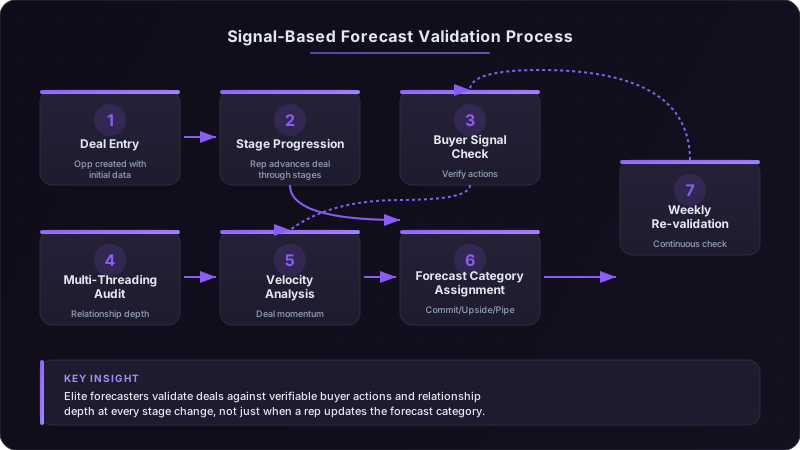
5 Sales Forecasting Mistakes Costing You 30% of Your Pipeline
Data from 200+ quarterly forecast reviews reveals the hidden errors that inflate commit numbers and destroy credibility. Here's what elite revenue teams do differently.
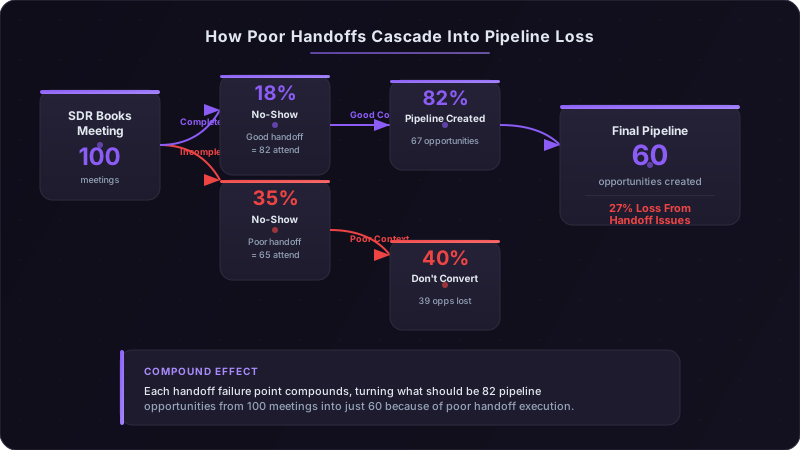
The SDR-AE Handoff Is Killing 27% of Your Qualified Pipeline
Poor handoff processes cost companies up to 30% of qualified opportunities. Here's the exact framework that fixes it, backed by data from 200+ sales teams.
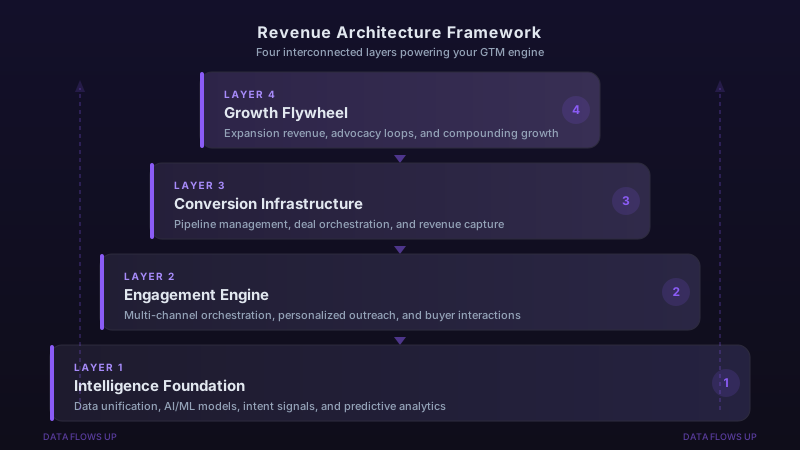
The Revenue Architecture Blueprint: Designing Your Go-to-Market Engine for the AI Era
Traditional go-to-market motions are breaking down. Here's the new blueprint for building a revenue architecture that leverages AI at every stage of the buyer journey.