The Automation Paradox: How to Scale Outreach Without Losing the Human Touch
More automation often means less personalization. Learn how leading sales teams are solving this paradox to achieve both scale and authenticity.
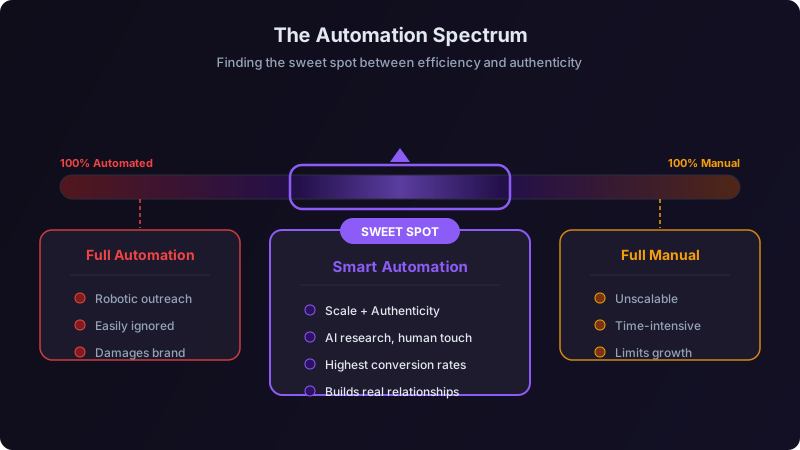
I've been on both sides of this. Early in my career, I ran a team that personalized everything. Every email was a custom masterpiece. We had a 22% reply rate and booked great meetings. We also maxed out at 30 prospects per rep per day and burned through SDRs faster than we could hire them.
So I swung the other way. Full automation. AI-generated emails, automated sequences, zero human review. We hit 300 prospects per rep per day. Reply rates cratered to 1.4%. We booked fewer meetings than before, and the meetings we did book were worse.
The answer, predictably, lives somewhere in the middle. But "somewhere in the middle" isn't helpful advice. What I want to share is the specific framework I use now to decide exactly what gets automated and what stays human, and how to avoid the traps at both extremes.
What Over-Automation Actually Looks Like
Let me be specific about the damage, because "generic messages get ignored" undersells it.
When we went full automation, here's what actually happened:
- Reply rates dropped from 9% to 1.4%. The emails read fine individually, but every prospect in a market segment got nearly identical messaging. Word gets around.
- Spam complaints tripled. Automated volume without quality controls got us flagged. Our primary domain deliverability took three months to recover.
- Brand damage was real. A VP at a target account posted one of our automated emails on LinkedIn with the caption "This is everything wrong with B2B sales." It got 2,000 likes. I still think about it.
- The meetings we did book converted poorly. Automated outreach attracted tire-kickers and low-intent responses. Our meeting-to-opportunity rate dropped from 35% to 12%.
The worst outcome of over-automation isn't low reply rates, it's domain reputation damage. If your automated emails get flagged as spam, you're not just hurting that campaign. You're hurting every email your company sends, including replies from real conversations in active deals. Recovery takes months.
What Under-Automation Actually Looks Like
The other extreme isn't great either. When every email is a custom piece of writing:
- Reps spend 60-70% of their time on non-selling activities. Research, writing, CRM logging, scheduling. The stuff that doesn't directly create pipeline.
- Follow-up is inconsistent. When reps are stretched thin, the first thing that drops is follow-up on warm leads. I've watched deals die because a rep forgot to send the third touch.
- Scaling requires linear headcount. Want to 2x your outreach? Hire 2x the reps. That's a terrible unit economics model.
- Quality varies wildly. Your best rep writes emails that get 25% reply rates. Your newest rep writes emails that get 3%. With no templates or AI assistance, you're entirely dependent on individual talent.
The Personalization Spectrum
Instead of thinking about automation vs. personalization as a binary, I think about it as a spectrum with five levels. Your job is to match the right level to each part of your sales process.
| Level | What It Means | Example | Best For |
|---|---|---|---|
| L1: Fully Manual | Human writes everything from scratch | Custom executive-level outreach | C-suite accounts, strategic deals |
| L2: Template + Custom | Template structure, human fills in 30-40% | "Hi [Name], I noticed [specific observation]..." with rep writing the observation | Tier 1 target accounts |
| L3: AI Draft + Human Edit | AI generates a draft, rep reviews and adjusts | AI writes based on prospect data, rep spends 1-2 minutes refining | Most mid-market outreach |
| L4: AI Draft + Human Approve | AI generates, rep approves or rejects without editing | AI writes, rep hits send or skip | High-volume outreach to qualified lists |
| L5: Fully Automated | No human in the loop | Automated nurture sequences, re-engagement campaigns | Low-priority or disqualified leads |
For most B2B SaaS companies, the sweet spot is L3 for your top 30% of accounts and L4 for the next 50%. Only your very top-tier strategic accounts justify L1 or L2, and only your lowest-priority segments should be L5. If you're doing everything at L1 or everything at L5, you're leaving money on the table.
The Automation Decision Framework
Here's how I decide what to automate. For every task in the sales process, I ask three questions:
1. Does this task require judgment about the specific prospect?
If yes, a human needs to be involved. If it's the same process regardless of who the prospect is, automate it.
2. Would a mistake here damage the relationship?
If a wrong word or bad timing could burn a deal, keep human oversight. If a mistake is invisible or easily recoverable, automate.
3. Is this task taking more than 10% of rep time?
If reps are spending significant time on something repetitive, the ROI on automating it is high even if the automation isn't perfect.
Automate Without Hesitation
These should be automated immediately. There's almost no downside and massive time savings:
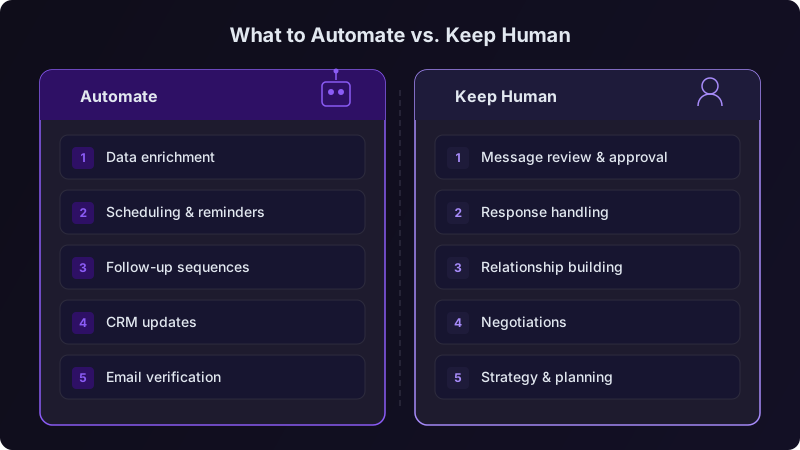
- Data enrichment and research: Pull firmographic data, technographic data, recent news, LinkedIn profiles. Reps should never manually Google a prospect.
- Email verification: Bounce checking before send. This is table stakes.
- CRM logging: Every call, email, and meeting should auto-log. Manual CRM entry is the #1 waste of rep time.
- Sequence timing: When to send follow-ups, what channel to use next, optimal send times. Algorithms are better at this than humans.
- Meeting scheduling: Calendar links, timezone detection, reminders, reschedules. Automate all of it.
- Lead routing: Signal-based routing to the right rep based on territory, account ownership, and availability.
Automate With Human Oversight
These benefit from AI assistance but need a human checkpoint:
- First-touch email drafting: AI generates based on prospect data, rep reviews before send. This is the L3 approach, and it's the biggest productivity multiplier most teams can implement.
- Objection handling responses: AI can draft based on the objection type and your playbook, but a human should review before sending. Tone matters too much here.
- Meeting prep summaries: AI compiles everything known about the account and prospect, but the rep decides what's relevant for the conversation.
- Follow-up after no response: AI can vary the messaging and angle, but rep should approve, especially for high-value accounts.
Keep Fully Human
Some things just don't work automated. Don't fight it:
- Negotiation and pricing discussions: Too much nuance, too much at stake.
- Executive relationship building: C-level prospects can smell automation instantly. These interactions need to be genuinely personal.
- Complex objection resolution: When a prospect has a real, specific concern that doesn't fit a template.
- Strategic account planning: Deciding which accounts to pursue, what angle to take, who to involve. This is judgment work.
- Post-meeting follow-up on active opportunities: Once a deal is in motion, every touchpoint should be intentional and human-crafted.
How We Structure It Now: A Day in the Life
Here's what a typical day looks like for an SDR on my team after we got the balance right:
Overnight, the system has enriched new leads, verified emails, pulled recent news and job changes, and scored all accounts based on signal data. The rep's dashboard is ready when they sit down.
Rep reviews Tier 1 and Tier 2 signals. AI has drafted outreach for each flagged account. Rep approves, edits, or skips each one. Most take 30-60 seconds to review.
Personalized calls and emails to the hottest signals. These are L2 or L3 personalization, the rep has real context and can reference specific signals naturally.
Rep reviews and approves AI-drafted sequences for high-priority accounts. L3-L4 personalization. Mostly approve-and-send with occasional edits.
AI classifies incoming replies, drafts responses, and routes hot leads. Rep handles objections and books meetings from interested replies.
Discovery calls, demos, and human-crafted follow-ups for active opportunities. Zero automation here, it's all relationship work.
The Five Rules I Follow Now
After burning myself on both extremes, these are the rules I won't break:
1. Never automate first touch to a named strategic account. If the account is in your top 50, a human writes the first email. Period. The downside of getting it wrong is too high.
2. Always automate data work. If a rep is manually looking up information that exists in a database somewhere, you've failed as an ops leader.
3. AI drafts, humans decide. The best model is AI generating options and humans selecting or refining. This preserves judgment while eliminating blank-page paralysis.
4. Monitor deliverability weekly. Automated volume can destroy email deliverability fast. Track bounce rates, spam complaints, and domain reputation as obsessively as you track reply rates.
5. Measure what matters per automation level. Don't compare reply rates across L1 and L4 outreach, they serve different purposes. Compare each level against its own baseline and purpose.
Getting Started: A Two-Week Implementation Plan
Week 1: Automate the Obvious
- Set up auto CRM logging (if you haven't already, and I'm shocked how many teams haven't)
- Implement email verification on all outbound
- Set up calendar booking links for all reps
- Automate lead enrichment on new prospects
Week 2: Add AI Drafting
- Choose your AI drafting tool (there are dozens, pick one and commit)
- Create your prospect research prompt template
- Have reps try L3 (AI draft + human edit) for one week
- Compare volume, reply rates, and meeting quality against their previous week
After two weeks, you'll have data on what works for your team and your market. Expand from there based on results, not assumptions.
The automation paradox isn't really a paradox. It's a resource allocation problem. Your reps have a fixed number of hours. The question is simple: are those hours being spent on activities that require human judgment, or on tasks a machine could do just as well? Every minute a rep spends on data entry or manual research is a minute they're not spending on the conversations that actually close deals.
Get the allocation right, and you get both scale and quality. It's not either/or, it's knowing which is which.
Ready to transform your sales pipeline?
See how Prospectory's AI-powered platform can help your team research, reach, and relate to prospects at scale.
Related Articles
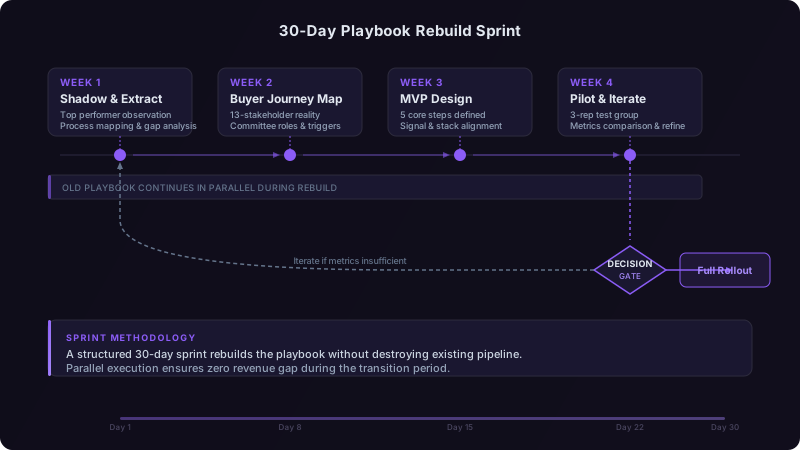
When to Fire Your Sales Playbook and Start Over
Five signals your playbook is broken beyond repair, plus a 30-day sprint framework for rebuilding from first principles without killing pipeline.
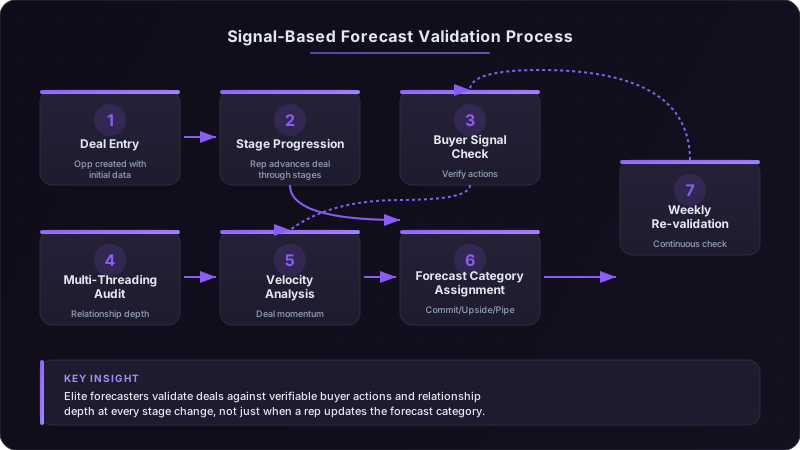
5 Sales Forecasting Mistakes Costing You 30% of Your Pipeline
Data from 200+ quarterly forecast reviews reveals the hidden errors that inflate commit numbers and destroy credibility. Here's what elite revenue teams do differently.
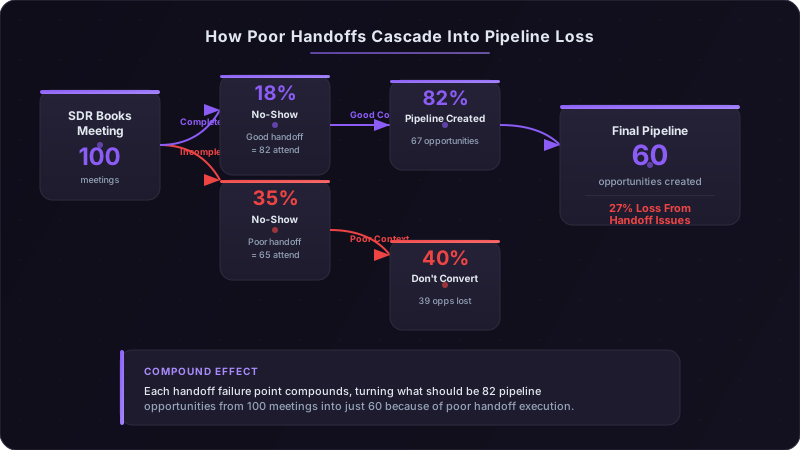
The SDR-AE Handoff Is Killing 27% of Your Qualified Pipeline
Poor handoff processes cost companies up to 30% of qualified opportunities. Here's the exact framework that fixes it, backed by data from 200+ sales teams.